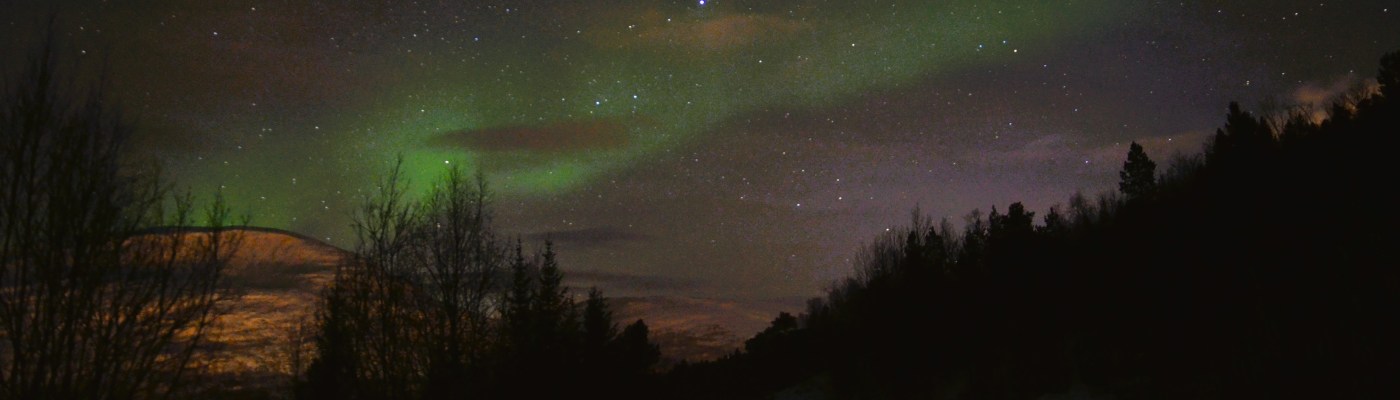
Aurora chasers are absolutely thrilled with the news: this season is going to be fantastic, and it is only going to get better.
It’s all thanks to solar activity, and right now, our Sun is super active. If seeing an Aurora is your travel dream, then you are in for a treat. Of course, it’s not as easy as jumping on the next plane, walking out of the airport, and seeing the green lights dancing above your head (though that can happen on rare occasions). These are natural phenomena in nature. There’s a bit of planning, a dash of preparation, and a serve of good luck. Some travellers have flown halfway around the world for a week of aurora chasing and seen naught. Others have had a day or two in the area, and been blessed with tri-colour shows every night. The truth is, the Auroras in both the north and south are more science than tourist showtimes. This is one of those occasions where knowing a little bit of science can really enhance your travel experience and make the moment even more magical. If you’re planning to tick this one off your wishlist, there are a couple of factors to keep in mind.
1. Where to Go for the Auroras
Chasing the lights can take you in either direction; North or South. The auroras are the visible effect of solar winds hitting the Earth’s magnetic field, deflecting towards the magnetic poles and then burning in our atmosphere. The majority of activity is close to the poles, in the Arctic Circle and the Antarctic Circle (highlighted below):
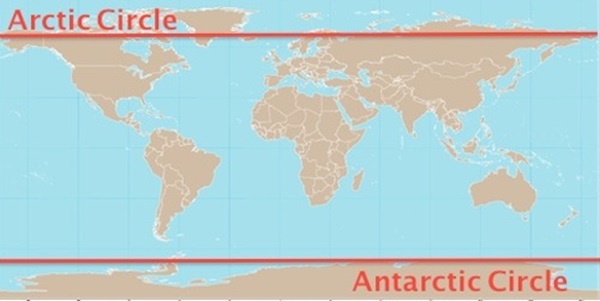
Sometimes, a huge solar flare can be powerful enough to appear outside the circle. You might hear on the news about auroras sighted in Australia or “as far south as England”. These are rare occurrences (for a good reason, detailed further below) and are not the norm. For your best aurora spotting, you need to be inside the circles.
Take another look at the map above, and you will notice another big factor for your travel. The Antarctic Circle is not a well-populated area, which may hinder your travel plans. That’s not to say you can’t travel to Antarctica; there are many tours and science expeditions for your journey. However, the Arctic Circle is far more accessible and, subsequently, the main reason why you will see far more photos of the Aurora Borealis than you will of the Aurora Australis. Ideal locations for the Northern Lights include: Tromsø (Norway), Fairbanks (Alaska, USA), Jasper National Park (Canada), Abisko National Park (Sweden), and Rovaniemi (Finland). For the Southern Lights, head to New Zealand.
2. When is the Best Time to See the Auroras?
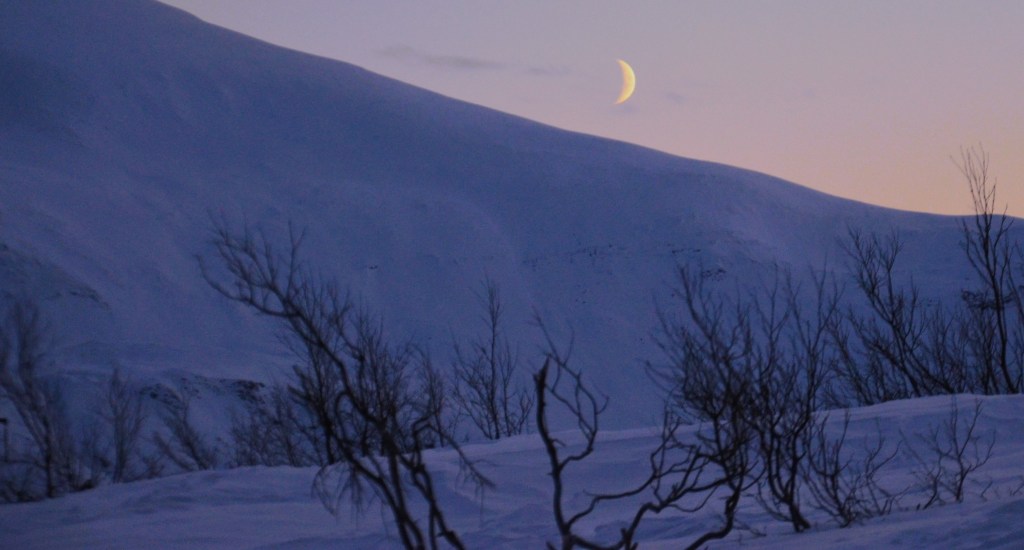
Once you have decided where you are going, you will need to think about when. Naturally, the darker, the better. Auroras are the easiest to see with the least amount of light pollution around. Fans of Astrotourism may also know how important it is to check your moon cycle. Light pollution isn’t just a city issue, and clear skies with a full moon can wash everything out with light. If possible, plan your trip with a dark or ‘new’ moon, when the sky is darkest.
The long nights of Winter sound perfect for auroras; however, seasonal weather will change things. For some regions, winter brings snow and cloudy skies. For example, Tromsø is an amazing location for a hot date with the Green Lady. December and January have the longest nights of the year, which, in theory, should give you even more viewing time. But ask the locals, and they know December and January have the most clouds, so your chance of a clear sky drops significantly. Most ‘aurora seasons’ in the North run from March through September, and reverse in the South, so there is still plenty of time to consider alternative dates for travel.
3. How Do the Auroras Happen?
You know where to go, and you know when to go, but how will you know when the auroras are at their strongest? There are plenty of apps available to help you pinpoint exactly when to run outside and look up. Some of these apps even have alerts to wake you up because, often, the best magic happens while you sleep. Fun fact: all of these apps gain their information from observatories and the scientists studying our Sun. None of these apps can guarantee you will see the auroras.
As mentioned above, auroras are created by solar winds hitting the Earth’s magnetic field. These geomagnetic storms are measured by a Kp Index from 0 to 9. The stronger the geomagnetic storm, the higher the Kp index and the more likely you are for a fantastic show. Often, the start of a geomagnetic storm during the day can lead to an aurora the following night.
It’s also important to note the 11-year cycle of the Sun and why many Aurora-Chasers are predicting 2024 to be the biggest year ever. Auroras are linked to high solar activity, reaching their peak every 11 years and creating great solar flares and coronal mass ejections (CMEs). The lead-up can increase both aurora frequency and intensity. But to be clear, scientists aren’t watching this just for the tourism updates.
Sudden bursts of energy can disrupt satellites, communication and even power substations. In September 1859, the Carrington Event produced auroras visible as far as Mexico, Japan, and Northern Australia. It also knocked out telegraph systems all over Europe and North America. A similar event in 1989 temporarily took out electricity across the entirety of Quebec (Canada). Governments invest a lot of money into scientific research to predict solar activity and prepare for future events. While the tourism industry benefits from the apps available, it is the scientists producing and interpreting the data. If you want to improve your chances of catching the lights, follow the science.
4. What You Will See (and How to Capture the Aurora)
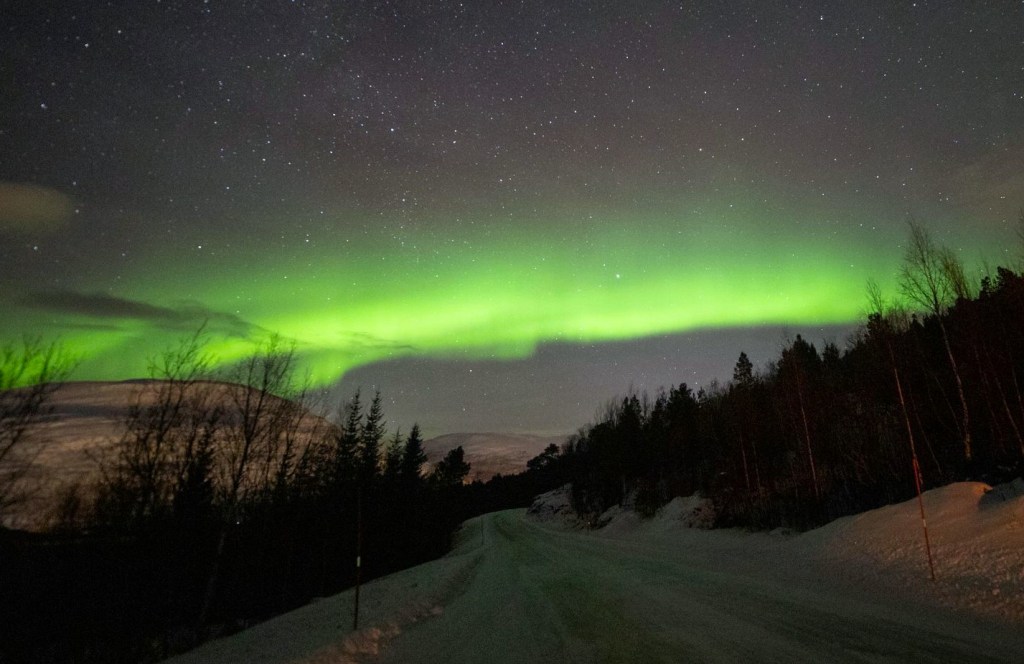
Photos of the auroras are The Main Reason why we all want to see them. The stunning green lights, or sometimes the rich magentas or cherry pink hues, are Insta-famous. But that’s not how it looks in reality. Okay, so sometimes you can see a slight hint in the sky or a soft glow of colour across the landscape. Most of the time, you will see soft whisps that look like clouds dancing across the sky, which prompts you to bring out the camera. Then, lo and behold, your camera captures the vibrant display that the human eye is simply not adept enough to see.
Expectation v reality; it can be a bit of a shock if you’re not prepared. You may even ask if you actually saw the Lights. This is where photography is your friend, and a little practice before you travel will make all the difference. For quick photos and video, you can easily capture the magic of the Lights with any mobile phone device. The best-detailed photos, however, are captured with long exposure. The longer you keep the shutter open, the more detail you will have.
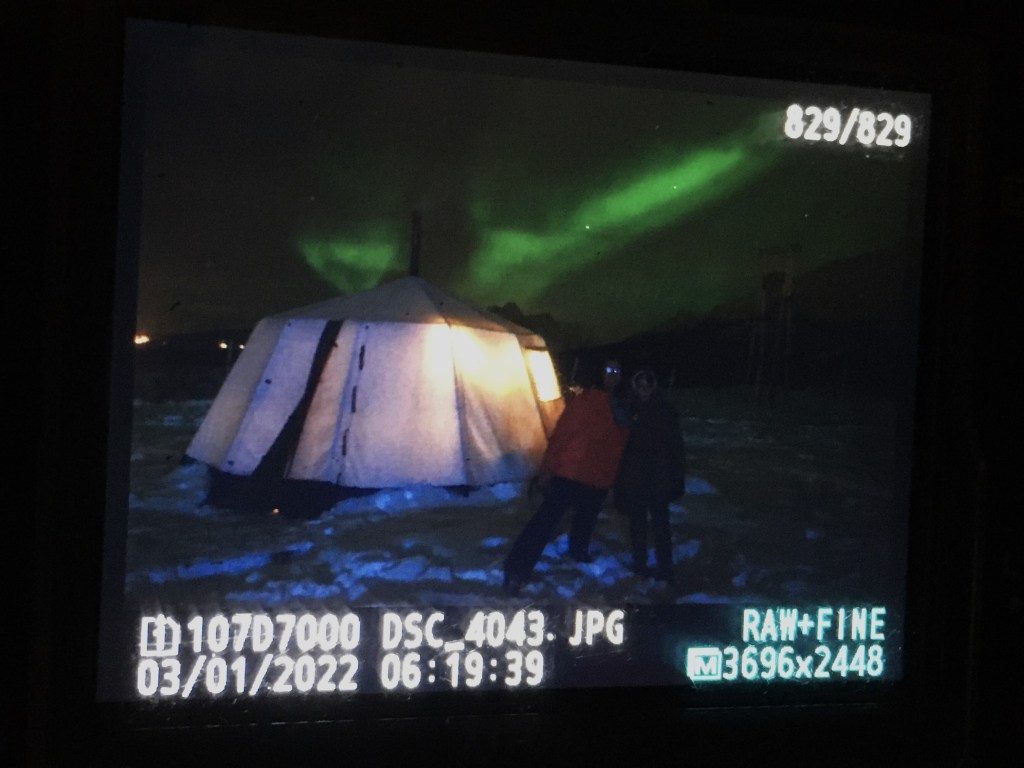
Break out the DSLR camera and become friendly with some manual settings. At the very least, learn where the timer is and how to leave the shutter open for around 15-20 seconds. From there, you can manually adjust to use the widest aperture (or lowest f-stop) and the highest ISO value. To be honest, this can vary slightly with each camera, so you’re best off reading your manual or checking some videos online.
In short, video on the mobile device will capture the dance, while still images will capture the colour and intensity. Or do both. Both are also good.
5. Enjoy the Moment
You would be surprised at how many people forget this one. Remember to enjoy the moment. You have done all the research and preparation to reach this point. For some people, it can be quite the journey to make it this far. There is still no guarantee; you are waiting for Nature to come to the party. But that doesn’t mean you can’t enjoy it as well.

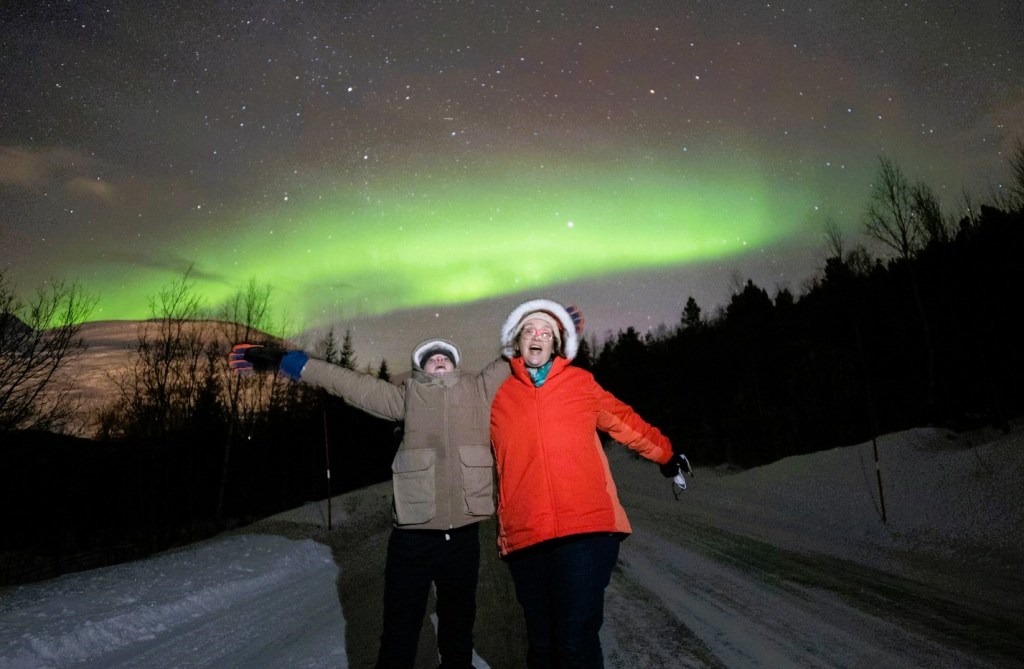
You may have to wait a while for the Aurora to appear. It’s going to be dark and cold. For example, Aurora Chasing in Tromsø took us to a forest outside the town where the temperature dropped to -20C by 11pm. Yet, I don’t remember the cold. I remember sitting around a makeshift BBQ from a large wok and rack, cooking up some Norwegian hot dogs, drinking hot chocolates, and sharing stories with my fellow travellers. When the Auroras appeared, we cheered and celebrated together. It was a magical moment made even more special with the great company we had.
Don’t forget to enjoy the moment.
 Travel Better Life