Yesterday (12 August) was World Elephant Day. A day to raise awareness for the protection of elephants. It seems easy enough. I mean, what’s not to love about elephants? They are beautiful creatures: gentle yet protective of each other, soothing to watch, with these beautiful eyes that can see into your soul. Throughout Africa and Asia, elephants feature high on the list of “things I want to see while travelling”. I was lucky enough to see them in both Thailand and Malaysia. And it is my deepest regret that I did not respect their majestic nature and their right to live peacefully.
What Not to Do
World Elephant Day is an organisation that works hard to help conserve and protect elephants. It celebrates elephants, and understands their place in the wild natural environment and as a significant figure in human culture. It also recognises the range of ways we are hurting elephants. The most obvious ways are through the horrible act of illegal poaching, hunting elephants for their ivory or, worse, for the trophy photo. However, there are also ways we are hurting elephants without truly understanding how we are doing it.
As travellers, many of us wish to see elephants in the wild. How they move through the jungles or across the savannas is magical. Their strength has been admired by humans for many generations, to the point of captivity and abuse when forcing elephants to be beasts of burden. Tourism is a two-headed monster, tempting many locals to create ‘opportunities’ for travellers to be up-close with the animals. Most travellers do not realise they are contributing to the problem. Fortunately, we can know better and then do better. And we can definitely Travel Better.
I was one of those tourists. Many years ago, I travelled to Chiang Mai (Thailand) and wanted to see the elephants. We were only there for two (2) days, and a local recommended an ‘elephant conservation centre’ nearby. They were said to rescue elephants from captivity with farmers in the local area. However, they also put the elephants on show for the tourists: painting images and used for rides along a short path in the jungle.
I visited Borneo (Malaysia) with my young family a few years later. We were fortunate to see wild pygmy elephants along the Kinabatangan River in Sabah. We also saw first-hand the impact Palm Oil farming had on the habitat for elephants and other wildlife. I remember talking with our guide at the Bilit Adventure Lodge and learning about the efforts of local tourist guides to protect the elephants. It was my first time learning about the fundamental importance of responsible travel: through the work of locals and not the greenwashing of travel guides and operators.
And then I screwed up again, this time at another elephant sanctuary outside Kuala Lumpur. The Kuala Gandah Elephant Conservation Centre called itself an ‘elephant rehabilitation centre’. The Malaysian Department of Wildlife and National Parks established the Centre in 1989 and continues to use it as a hub for the Elephant Relocation Team for rescuing or removing unwanted elephants. It is now known as the National Elephant Conservation Centre and is considered Malaysia’s lead elephant conservation centre.
When we visited in 2011, the Centre offered educational videos of washing elephants, feeding elephants, and their ongoing care at the centre. We were then offered the opportunity to ride an elephant and bathe with baby elephants in the nearby river. It’s all presented as a ‘feel-good’ moment, shared with the elephants who have been rescued. It is all designed for the tourist dollar and especially for you to leave feeling like you did a good job supporting all of the great work they are doing for the elephants.
Is Good Enough Really Good Enough?
The truth is, Kuala Gandah is one of the better Elephant Conservation Centres, but if I had my time again, I would not visit. The good news is there are no more elephant rides. The efforts made with elephant relocation are genuine and very positive. However, bathing with baby elephants continues, and there are many questions about whether this is healthy for young creatures.
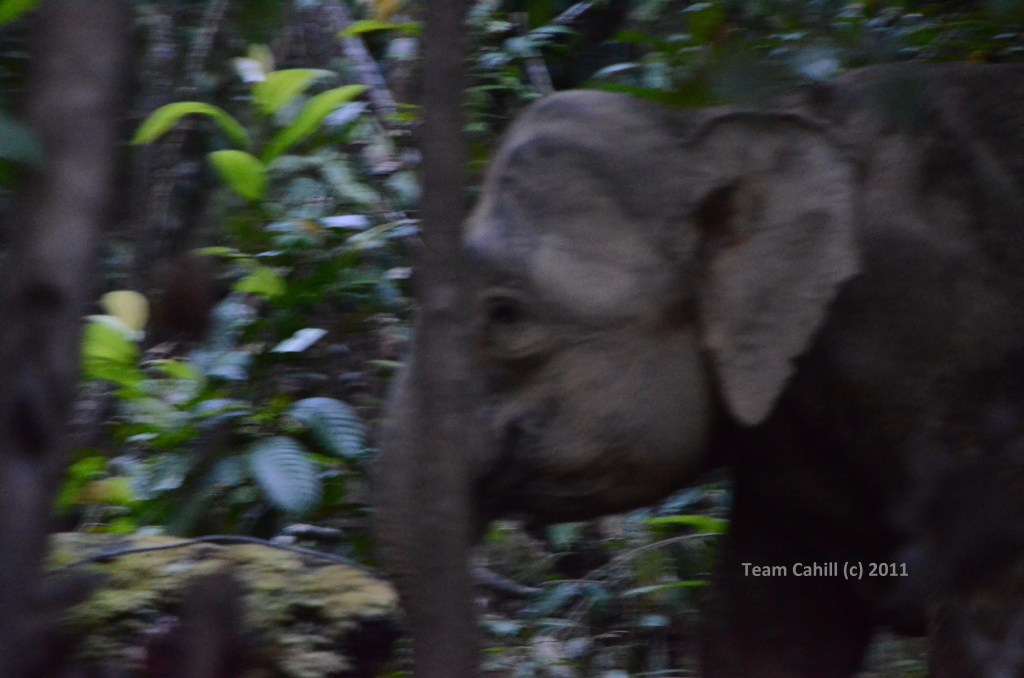
You will notice I have not included any photos of elephant rides or bathing in this article. That would defeat the purpose of my article. Instead, I have included photos (horrible grainy photos!) of elephants we saw in the wild. Why? Because if we, as travellers, wish to see elephants in Asia or Africa, we should do so in non-exploitative and sustainable environments.
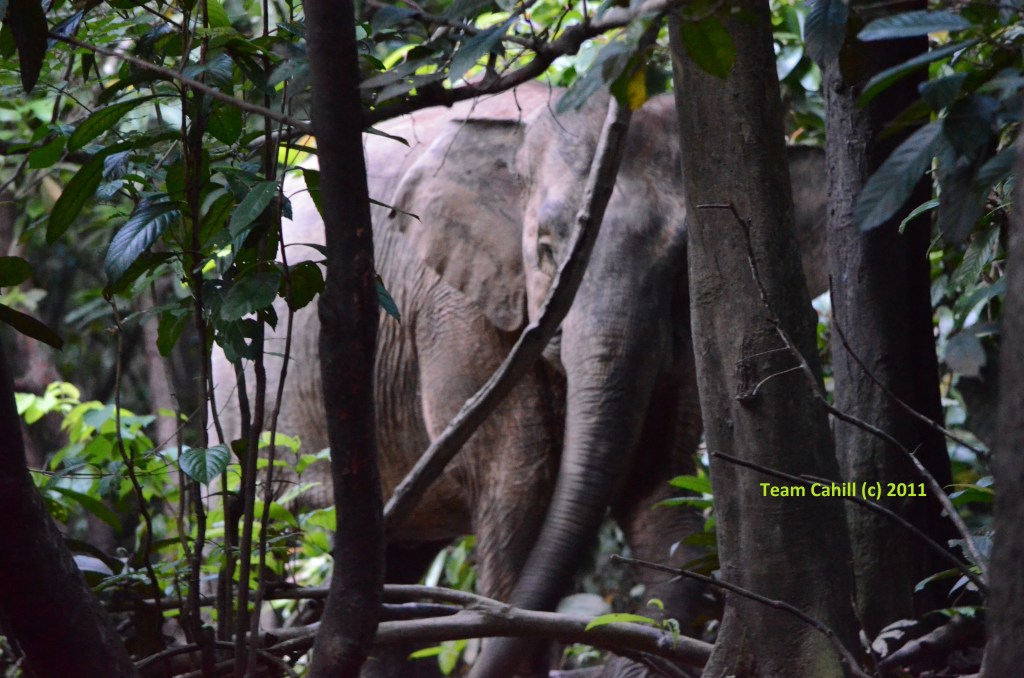
** The photos are grainy because we came upon the elephants at the very end of a river safari, as dusk fell right before a big storm rolled in. All of the factors for the worst photography ever but still absolutely perfect for this natural and rare experience.
The rescue efforts of the Kuala Gandah Centre are genuine. However, the term “relocation” is used for any elephant deemed unwanted by humans in any area. It does little to take responsibility for destroying the elephants’ natural habitat–a key reason why they tend to move into areas where humans don’t want them. While many will be transferred back to the wild from the centre, some elephants will be ‘domesticated’ and continue living at the conservation centre. And yes, they will be trained to work in the shows and the feeding and bathing sessions for tourists like you and me. The upkeep of elephants is pretty expensive. Even with this in mind, I regret visiting the centre and being one of many tourists adding to the problem.
What to Do Instead
If you have read this and still want to see the elephants, please Travel Better. The internet has improved exponentially in promoting GOOD responsible travel and less of the greenwashing. For example, for elephants in Malaysia, I highly recommend Bilit Adventure Lodge, on the Kinabatangan River (Sabah). Please note: you are not guaranteed an elephant sighting. They are wild animals in their natural environment, so they have the advantage.
The reason I love Bilit Adventure Lodge is because their local staff also believe in the protection of their local environment. Many of them actively chose to work at BAL over jobs at any of the palm oil farms in the area. Why? Because the locals believe they need to reclaim the environment for both people and nature. If they want to continue living here and enjoying their homes, they need to protect the homes of the wildlife too. The elephants (and all the wildlife) are fortunate to have local guides at BAL. For them, it’s World Elephant Day every day.
Every one of us wants to travel better, do better, and gain better experiences from our travel. Being responsible travellers also means taking responsibility for our choices; past, present, and future. I regret my past travel choices with elephant centres, but now I know better. And I can do better, be it with more responsible travel choices in the future or by promoting events like World Elephant Day. I hope you don’t judge me for my past decisions or judge others if they have done the same. The best we can do now is make better decisions for future travel.
Let’s start with raising awareness of the plight of elephants in the wild. For more information on World Elephant Day and how to help, please visit the official website here.
If you know of a great responsible travel program that supports ethical and non-exploitative opportunities with elephants, please share in the comments below!
 Travel Better Life